Private Property Placement
A short-term rental kept within a residential or commercial lot generally falls outside Phoenix city permit requirements because the property owner controls access to the site.
Phoenix Portable Bathrooms explains that most short-term porta potty rentals on private property in Phoenix do not require a city permit. Approval is more likely when a unit occupies public property or a right-of-way, supports a permitted public event, or remains in place long term. Placement, duration, and ownership of the ground determine which rules apply.
A short-term rental kept within a residential or commercial lot generally falls outside Phoenix city permit requirements because the property owner controls access to the site.
Placement on a street, sidewalk, city park, or other public right-of-way needs authorization from the City of Phoenix department responsible for that space.
Construction sanitation follows workplace rules even when no city placement permit is needed, while rentals extending across months can face Maricopa County health or zoning review.
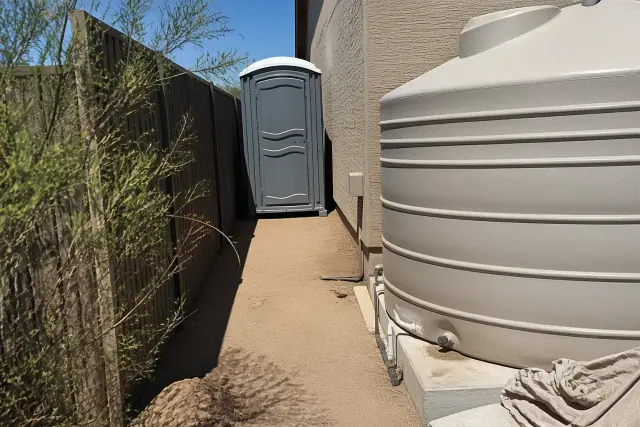
A unit on level, stable ground inside a backyard stays away from traffic while preserving a clear service path. This is the common short-term private-property case that usually needs no city permit.
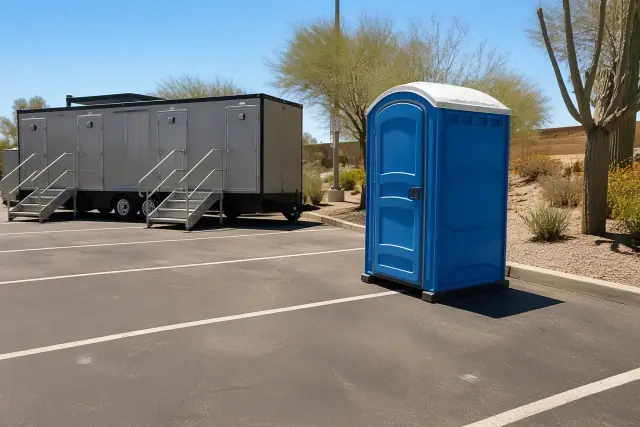
A portable toilet near a sidewalk or street boundary can cross from private land into regulated public space. The lot line makes clear why the approval requirement changes.
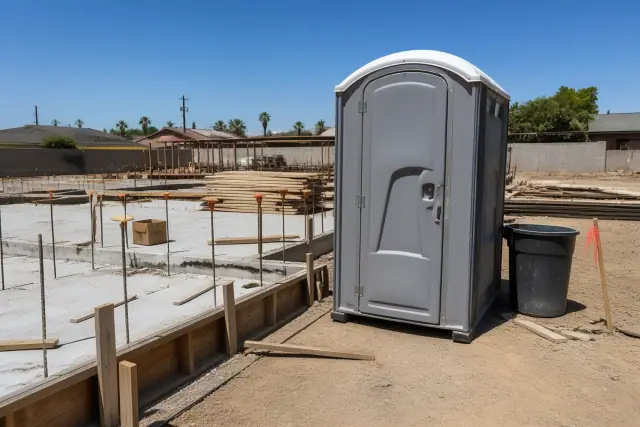
Units within a private jobsite boundary need to remain accessible to workers and service vehicles. This placement separates workplace sanitation compliance from public-property permitting.
Private events lasting three days or fewer generally do not require a Phoenix or Maricopa County placement permit when the unit stays on private property.
Public streets, sidewalks, parks, rights-of-way, and large public events require city coordination; a special event application commonly asks for the planned sanitation provisions and unit count.
OSHA 1926.51(c)(1) starts at one toilet for every 20 workers on a site without potable water access. That is a jobsite safety requirement, not a Phoenix city permit for standard placement on private construction property.
Maricopa County chemical toilet, portable restroom, and waste holding tank permits are issued for a one-year period and renewed annually. Rentals extending across months or appearing permanent are more likely to receive health or zoning review.
| Placement | Permit Outlook | What to Confirm |
|---|---|---|
| Short-term use on private property | A city permit is generally not required. | Keep the unit on the private lot and check any HOA placement rules. |
| Street, sidewalk, park, or public right-of-way | Prior City of Phoenix authorization is required. | Contact the department responsible for the street, park, or right-of-way. |
| Private construction jobsite | Standard placement generally does not need a city permit, but workplace sanitation rules apply. | Match the unit count to the crew and keep the setup within the site boundary. |
| Long-term or indefinite placement | County health or zoning review is more likely. | Confirm duration, servicing records, zoning, and waste-tank requirements. |
The practical answer begins with the boundary line. A portable toilet used temporarily on a private Phoenix lot is generally rental equipment, while the same unit on a street, sidewalk, park, or public right-of-way needs city approval. A large public event may address the unit through its special event permit, and a permitted construction project may include sanitation details in the broader site review.
Location, duration, and land ownership are the main permit factors, but the event type, zoning classification, waste holding tanks, and servicing plan can add another layer of review. HOA covenants may restrict backyard visibility or placement even when the city does not require a permit. Whatever the location, waste cannot be discharged onto the ground or into a storm drain, and units need stable ground plus service-vehicle access.
Can a unit go in a backyard? Yes, short-term personal use on private property generally needs no city permit, though HOA rules may still affect placement. Does an ADA unit need its own permit? No, but an accessible public event may require at least one ADA-compliant unit per restroom bank. What does an application need? Expect to provide the placement location, site diagram, duration, unit count, zoning information, and review fee. Rental cost is separate from permit fees: standard-unit pricing nationally generally runs $100 to $430, with weekly rates commonly near $290, depending on unit type, rental length, and service frequency.
Share the property type, exact placement, rental duration, expected attendance or crew size, and whether the unit will touch public space. Those details make it easier to identify the applicable Phoenix, Maricopa County, event, or jobsite requirement and prepare a written rental quote.