Proudly serving Phoenix, Mesa, Scottsdale, Glendale, Tempe, Chandler & surrounding areasCall or Text 24/7: 602-449-8353
Aerial view of residential neighborhoods, stucco homes, and desert mountains in Phoenix, AZ.

Long-Term Portable Toilet Rentals and Scheduled Sanitation Maintenance in Phoenix, AZ

Phoenix Portable Bathrooms provides long-term portable toilet rentals for extended projects and ongoing facility needs in Phoenix, Arizona. We supply construction portable toilets, high-rise units, and ADA portable toilets for jobs that need reliable sanitation beyond a short event. Sink-equipped units, handwashing stations, portable waste holding tanks, and shower or restroom trailers can support more complex site requirements. Our team helps plan unit counts, placement, servicing frequency, and a written quote before delivery.

Long deployments in the Sonoran Desert need more than a weekend-event setup. Summer surface temperatures regularly exceed 115°F, while monsoon humidity swings from June through September can change odor-control and tank-turnover needs. UV-stabilized polyethylene housing, heat-resistant deodorizer treatment, and service schedules based on actual foot traffic help equipment hold up under those conditions. Fixed routes across Maricopa County also keep pumping, cleaning, restocking, and inspections consistent as projects continue.

Phoenix covers 517.9 square miles and has more than 1.6 million residents within a metro area of 5.19 million, so extended sanitation needs range from road work and subdivisions to warehouses and ongoing facility support. We account for crew size, shift patterns, truck access, accessibility, and changing work zones before units are placed.

Phoenix Portable Bathrooms provides long-term portable toilet rentals in Phoenix, Mesa, Scottsdale, Tempe, Chandler, Glendale, and the greater Maricopa County metro area.

★ ★ ★ ★ ★4.9/5.0 Customer Rating · 27 Years of Industry Experience · Thousands of Rentals Delivered · Licensed & Fully Insured · Serving Job Sites & Events

Long-Term Rental Options & Benefits

What Is a Long-Term Portable Toilet Rental?

A long-term rental covers a deployment lasting 30 days or longer, including road projects, multi-phase subdivision builds, warehouse expansions, and ongoing facility support where permanent plumbing is not yet practical. The setup is planned for months of use rather than a single weekend.

Long-term units use reinforced tanks and UV-stabilized polyethylene housing suited to sustained desert sun. The service plan also accounts for worker headcount, actual foot traffic, shift schedules, and site conditions instead of relying on a one-size-fits-all interval.

Before committing, confirm the number and type of units, the servicing cadence, and clear truck access. Fenced sites, upper building levels, active excavation zones, and high-volume wash-down needs all affect placement or whether high-rise units and waste holding tanks should be included.

Benefits of a Planned Long-Term Rental

A well-planned rental keeps sanitation aligned with the way a site actually operates. The unit mix and service route can adapt as crew size, access, and active work areas change.

  • Fixed servicing routes for consistent pumping and cleaning
  • Unit counts matched to crew size and shift patterns
  • Restocking of toilet paper and hand sanitizer
  • Tank rinsing, deodorizing treatment, and hardware checks
  • ADA units and accessible placement planning where required
  • Sink units and handwashing stations for added hygiene
  • Relocation coordination as active work zones shift
  • Written quotes that itemize included service and add-ons
Extended-Site Sanitation

Portable Sanitation Rental Services

Long-term sites may need more than standard ground-level units. We plan construction, high-rise, accessible, handwashing, holding-tank, shower, and restroom-trailer options around site layout and expected use.

Construction Portable Toilets

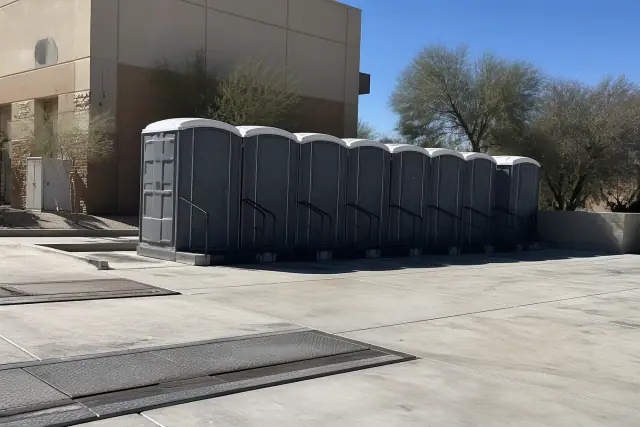
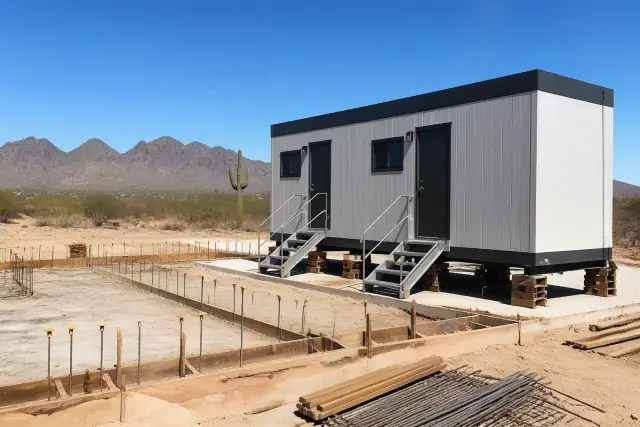
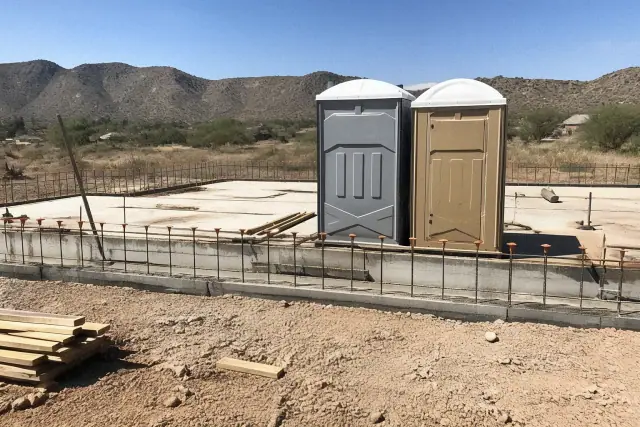
Construction portable toilets on a concrete slab foundation at a jobsite in Phoenix, AZ.

Construction rentals are sized around crew count, shift patterns, and project layout. Units can follow framing, MEP rough-in, finish work, grading, and demolition phases while the service cadence adjusts to traffic and dust.

Request Estimate

High-Rise Portable Toilets

Portable toilet units installed on a concrete loading dock at an industrial site in Phoenix, AZ.

Downtown vertical construction can begin with ground-level units and transition to hoisted or floor-specific high-rise configurations. Planning that transition keeps restrooms closer to the active crew as the structure rises.

Request Estimate

ADA Portable Toilets

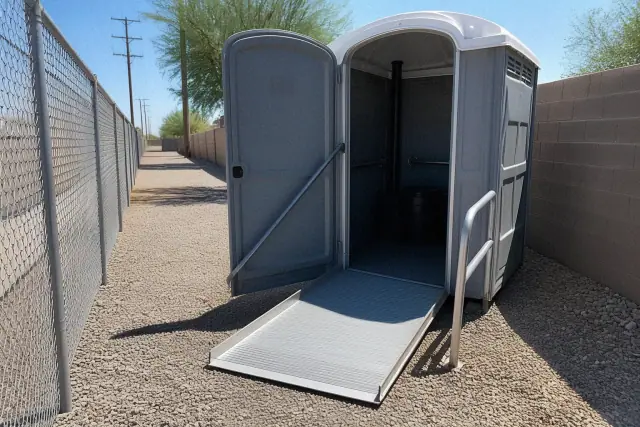
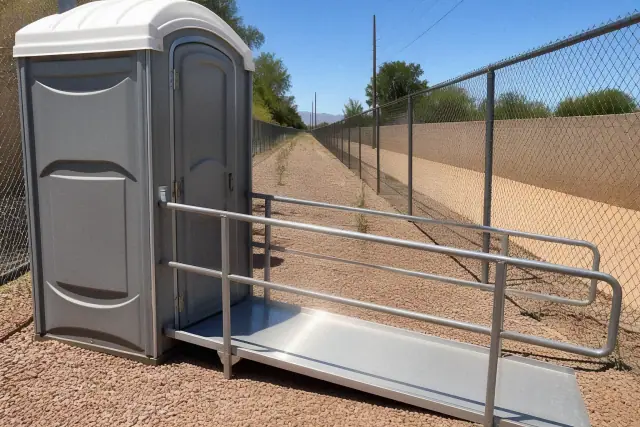
ADA-compliant portable toilet with ramp access on a gravel utility path in Phoenix, AZ.

ADA units are built for accessible use rather than retrofitted from standard units. We review the approach surface, proximity to the main restroom bank, interior clearance, grab bars, and door hardware before placement.

Request Estimate

Portable Toilets with Sinks

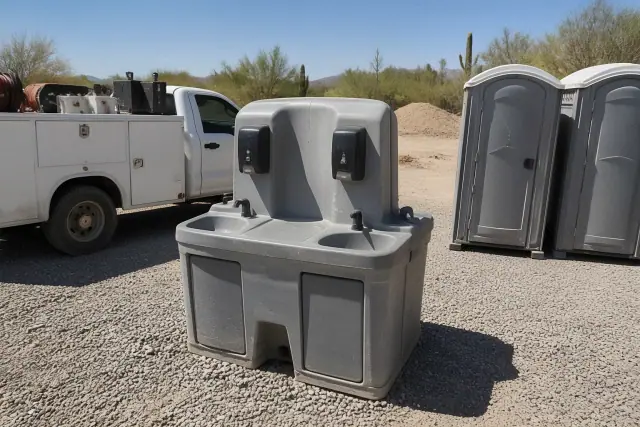
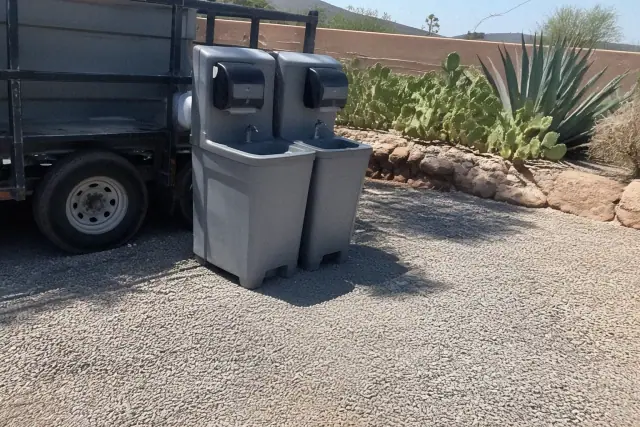
Portable toilet and dual handwashing station on a gravel site in Phoenix, AZ.

Sink-equipped units add running handwashing capability without requiring a full restroom trailer. Separate handwashing stations can also be placed where crews or guests need extra capacity near the restroom bank.

Request Estimate

Portable Waste Holding Tanks

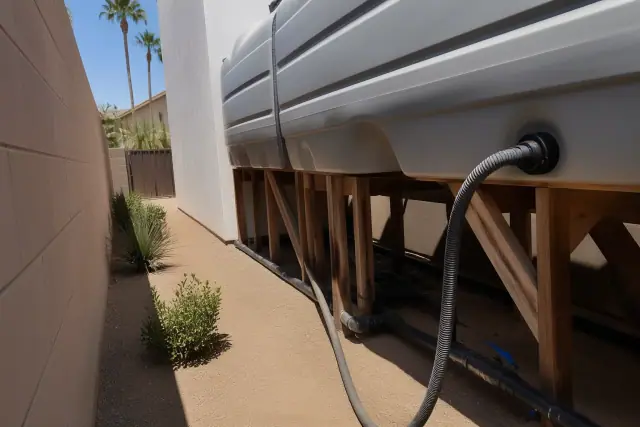
Portable waste holding tanks with connection hoses in a side yard path in Phoenix, AZ.

Waste holding tanks support high-volume wash-down, dewatering, and temporary facilities that need additional storage. Tank capacity and service frequency are planned alongside the restroom units so access and pumping remain workable.

Request Estimate

Restroom and Shower Trailers

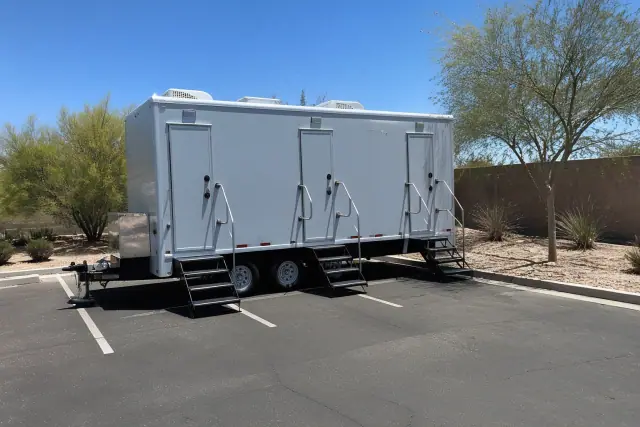
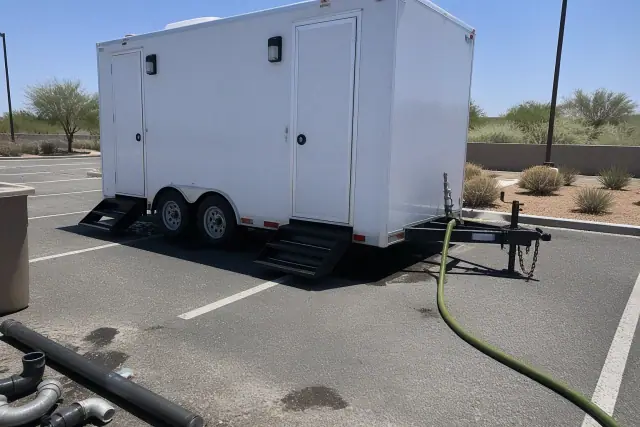
Luxury restroom and shower trailer parked on an asphalt lot in Phoenix, AZ.

Portable shower trailers and luxury restroom trailers suit longer assignments, professional events, film shoots, and facilities needing a higher-finish setup. Trailer planning includes water, dedicated shore power or generator load, pumps, HVAC, and guest capacity.

Request Estimate
Match the Site

Long-Term Portable Toilet Options

The right configuration depends on who will use the facilities, where units can be placed, and how often service trucks can reach them. These options cover the most common extended-project requirements in Phoenix.

Portable unit on a concrete slab foundation at a construction site in Phoenix, AZ.

Standard Long-Term Units

Standard units provide the core restroom setup for construction crews, road projects, subdivisions, and temporary facility support. Their service plan is built around real usage rather than a weekend-event schedule.

  • Reinforced waste tank
  • UV-stabilized polyethylene housing
  • Ventilation and interior lock
  • Hand sanitizer dispenser
  • Scheduled pumping and restocking
Request Estimate
ADA-compliant portable toilet with ramp access on a gravel path in Phoenix, AZ.

ADA-Compliant Units

Accessible units serve public-facing sites and workers or guests who need additional maneuvering space and support hardware. Placement matters as much as the unit itself.

  • Larger interior footprint
  • Code-height grab bars
  • Closed-fist operable door hardware
  • Level, hard-surface approach
  • Placement near the main restroom bank
Request Estimate
Dual handwashing station set up on a gravel lot in Phoenix, AZ, with desert plants in the background.

Sink and Handwashing Setups

Sites needing more than sanitizer can combine sink-equipped toilets with standalone handwashing stations. The mix depends on crew size, guest flow, and whether food or drink service is present.

  • Built-in sink options
  • Standalone handwashing stations
  • Running-water capability
  • Placement near high-traffic areas
  • Service coordinated with restroom units
Request Estimate
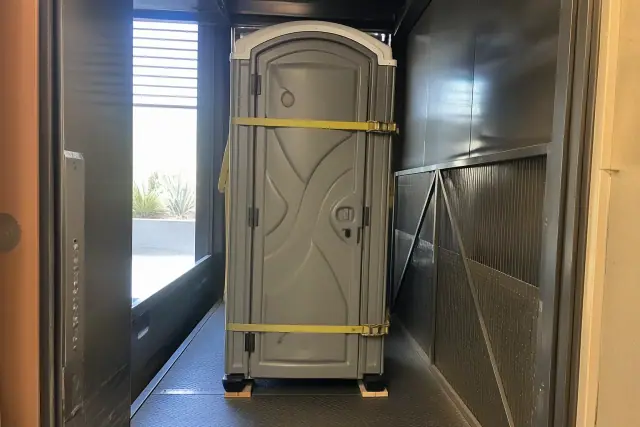
Narrow-profile portable toilet unit inside a high-rise service elevator at a construction site in Phoenix, AZ.

High-Rise Configurations

High-rise configurations keep portable facilities usable as vertical construction moves away from ground level. Delivery, hoisting, floor placement, and servicing access must be coordinated before the transition.

  • Ground-level staging early in the build
  • Hoisted or floor-specific units
  • Coordination with the superintendent
  • Servicing access planned in advance
  • Relocation as vertical work progresses
Request Estimate
Luxury restroom trailer installed on an asphalt lot in Phoenix, AZ, showing external hose and waste valve connections.

Trailer and Holding Solutions

Trailers and holding tanks extend the setup when a standard portable toilet bank is not enough. We account for storage, pumping, water, electrical load, climate control, and access before delivery.

  • Portable waste holding tanks
  • Portable shower trailers
  • Multi-stall restroom trailers
  • Shore-power or generator planning
  • HVAC, lighting, and water-pump load review
Request Estimate
Finding Your Right Fit

Choosing the Right Rental Approach

The best long-term plan starts with duration, headcount, shift patterns, public accessibility, site layout, and service-truck access. From there, the unit mix and service cadence can match the project instead of forcing the project around the equipment.

Fixed-Route Servicing

Crews service equipment on fixed routes throughout Maricopa County, helping a six-month job in Buckeye receive the same consistent pumping, cleaning, restocking, and inspection routine as a downtown high-rise project.

Desert-Ready Equipment

Reinforced tanks, UV-stabilized housings, ventilation, and deodorizing treatment formulated for high-heat breakdown resistance help long-term units perform through sustained sun and dry heat.

Site-Specific Planning

We review worker or guest counts, delivery clearance, approach paths, drainage, excavation, fencing, and active work zones before placement. That planning reduces avoidable moves and service-access problems later.

What Sets Us Apart

Why Choose Us for Long-Term Rentals?

Phoenix Portable Bathrooms combines site planning, route-based maintenance, accessible options, and clear written quotes for extended rentals. We itemize delivery, pickup, the standard servicing cadence, initial setup, and any requested extra visits or relocations so the scope is clear before equipment arrives.

Request a Written Quote

Too Few Units for the Crew

Undersizing the restroom bank creates lines, heavy tank use, and sanitation issues. Crew counts and shift patterns should be reviewed as trades arrive and leave so the unit count stays aligned with the active workforce.

Heat-Driven Odor Buildup

Phoenix heat accelerates odor buildup and shortens the effective life of standard deodorizing products. Service frequency, tank turnover, ventilation, and high-heat treatment need to reflect the season and actual site traffic.

Overflow and Supply Gaps

Waiting for a tank to approach overflow invites complaints and inspected-site problems. Proactive pumping, tank rinsing, paper and sanitizer restocking, seal checks, and service logs help crews address usage before it becomes a shutdown issue.

Restricted Service Access

Fences, excavation, overhead lines, and narrow staging areas can prevent a service truck from reaching a unit. Access should be confirmed before delivery and kept clear throughout the rental.

Changing Active Work Zones

Multi-phase builds can shift active work areas every few weeks, leaving units behind fencing or far from the crew. Planned relocation keeps facilities near current work while preserving a workable service route.

Inaccessible Unit Placement

An ADA unit on soft, sloped, or isolated ground may not provide an accessible restroom experience. The approach surface, slope, location within the restroom bank, and door clearance all need review before setup.

How it works

Our Long-Term Rental Process

Long-term rentals move from scope and access planning to written pricing, delivery, scheduled service, and adjustments as the site changes. Each step keeps the equipment mix and route aligned with the project.

01.

Define the Rental Scope

Share the project duration, worker or guest count, shift schedule, unit preferences, and expected changes in site activity. We use that information to identify the initial restroom, handwashing, trailer, or holding-tank mix.

02.

Review Access and Placement

Confirm level placement, truck access, fencing, excavation, overhead lines, drainage paths, and accessible approach routes. High-rise and trailer setups also require advance coordination for hoisting, power, water, and pumping access.

03.

Set the Service Cadence

We plan pumping and restocking around headcount, site traffic, unit type, and seasonal heat. The written quote identifies the standard cadence and itemizes requested extra visits, relocations, or expedited delivery.

04.

Deliver and Set Up

Units are placed in the approved locations with service points accessible to the route crew. At delivery, site supervisors receive a five-minute walkthrough of locks and servicing access points.

05.

Pump, Clean, and Restock

Each scheduled visit includes waste pumping, tank rinsing, interior wipe-down, paper and sanitizer restocking, deodorizer treatment, and a visual inspection of seals and hardware. Unit service logs help the crew respond with the equipment history in hand.

06.

Adjust and Complete the Rental

As headcount or active work zones change, we can review the unit count, service frequency, and relocation needs. At project completion, pickup is coordinated around site access and the final work schedule.

Plan Your Extended Rental

Plan Long-Term Portable Toilet Rentals

Tell us how long the project will run, who will use the facilities, and where service trucks can enter. We will help review unit types, placement, servicing frequency, and the written quote before delivery.

Rental Planning Help

Long-Term Portable Toilet Rental FAQs

These answers cover common questions about Phoenix rental pricing, service schedules, delivery, accessibility, and site planning. Call with your duration, headcount, and access details for a written quote tied to the actual project.

Call Our Rental Team

A two-week standard-unit rental in the Phoenix area generally runs between $150 and $250, depending on delivery distance and servicing frequency. ADA units and units with sinks cost more because of their larger footprints and added hardware, and a written quote confirms what is included.

Standard units commonly run $225 to $260 for shorter terms, with average per-service costs near $60, while ADA-compliant units generally run $325 to $355 for comparable terms. Single-project standard configurations may total $78 to $182, and higher-finish sink or interior upgrades can range from $350 to $650 weekly depending on features.

An operator needs rental units, a service truck equipped for waste pumping, compliant wastewater disposal, and working knowledge of field-sanitation requirements when serving construction sites. The industry generates roughly $3.3 billion in annual revenue nationally, but dependable routing and maintenance are central to operating successfully.

Portable toilet rental businesses can achieve net profit margins in the 20 to 25 percent range when routing and maintenance are efficient. Demand is tied to construction and event calendars, while customer retention depends heavily on keeping units clean, stocked, and serviced reliably.

Moderate-use sites typically start with once-weekly service, while high-traffic construction sites or events may need twice-weekly or daily service depending on headcount. Larger crews can also require a mid-week visit, and Phoenix summer conditions may justify a tighter schedule.

A standard rental includes the unit, delivery, pickup, initial setup, and the agreed service visits. Service covers waste pumping, tank rinsing, interior cleaning, toilet paper and sanitizer restocking, deodorizing treatment, and visual hardware inspection; sink units, handwashing stations, and upgraded interiors are separate options.

Same-day delivery may be available depending on the unit type and route availability when you call. Next-day delivery is the standard schedule for most orders, while long-term and multi-unit deployments benefit from advance booking so access and routing can be confirmed.

A 28-day standard-unit term in the local market typically falls between $162 and $240 for the full period, while daily pricing carries a higher per-day cost. Extending the rental to 3, 6, or 12 months can lower the per-unit monthly cost because delivery and pickup occur once instead of repeatedly.

Arizona field-sanitation planning generally starts with at least one toilet facility per 20 workers for shorter shifts, with adjustments for larger crews and different shift patterns. The unit count should be reviewed as framing, MEP rough-in, and finish crews change the active headcount.

Clear a level, accessible location away from active excavation, overhead lines, waterways, storm drains, and drainage paths. Delivery trucks need roughly 10 feet of clearance to maneuver units, so fenced or restricted sites should identify the access route during scheduling.

Units designed around the 2010 ADA Standards for Accessible Design include a 60-inch interior turning radius, code-height grab bars, and closed-fist operable door hardware. Placement also needs a level, hard-surface approach with no more than a 1:12 slope and reasonable proximity to the main restroom bank.

Sustained desert sun, dry heat, dust, and seasonal humidity changes can accelerate odor buildup and wear on poorly suited equipment. Long-term plans should account for UV-stabilized housings, ventilation, heat-resistant deodorizer treatment, and service frequency based on actual use.

A general starting point is one unit per 50 guests for an event lasting four hours or less, with more capacity for longer events or alcohol service. Multi-stall configurations can help events with 200 or more guests, and multi-day events should include scheduled mid-event service and backup capacity.