Fresh Water and Flushing
A demand pump pressurizes onboard fresh water for sinks and real flushing toilets. Waste then moves through drainage lines into sealed holding tanks rather than a septic connection.
Phoenix Portable Bathrooms explains how luxury portable bathrooms use onboard water and waste tanks, powered pumps, flushing toilets, and climate control inside a finished trailer. Understanding that self-contained system matters in the Salt River Valley, where reliable cooling and scheduled tank service affect comfort throughout a rental.
A demand pump pressurizes onboard fresh water for sinks and real flushing toilets. Waste then moves through drainage lines into sealed holding tanks rather than a septic connection.
A 12-volt system, shore-power hookup, or external generator can power the water pump, LED lighting, exhaust fans, and air conditioning. Venue power is common for events, while remote job sites often rely on a generator.
Tank-level sensors help flag service needs. On scheduled visits, a vacuum truck connects to the discharge valve, pumps waste into a sealed truck tank, and crews refill fresh water; standard construction units are typically serviced weekly, while high-traffic events may need same-day or next-day service.
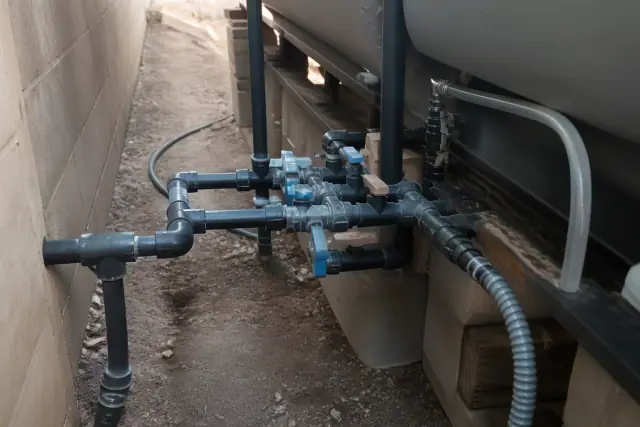
A multi-stall trailer's freshwater tank, demand pump, and separate gray- and black-water tanks. Their arrangement explains how the trailer works without a permanent sewer connection.
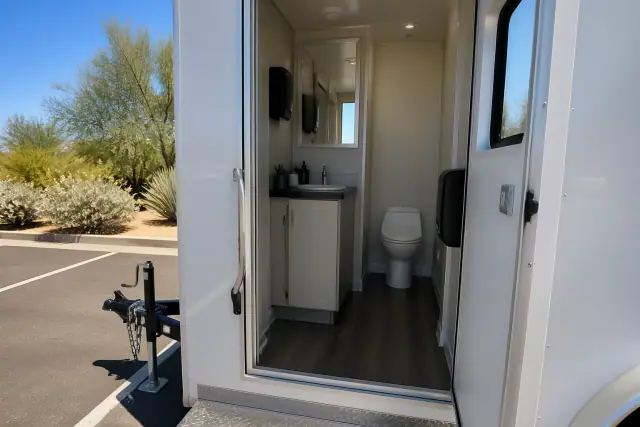
Finished walls, non-slip flooring, residential-style fixtures, private locking stalls, and a rooftop or ducted air-conditioning unit. These features create the feel and function of a permanent restroom.
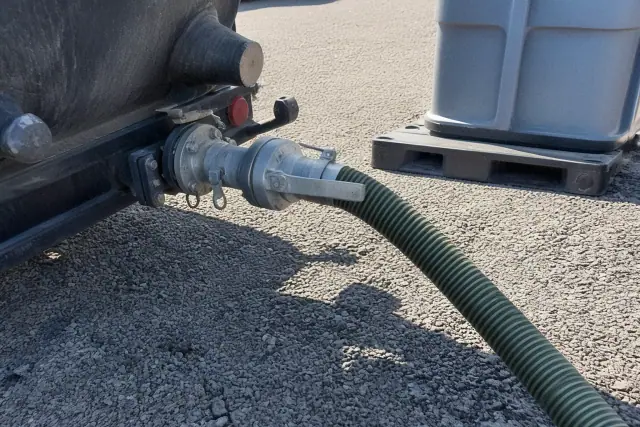
A service hose connected to the holding-tank discharge valve during a scheduled pump-out. This illustrates how waste leaves the self-contained unit without site plumbing.
Freshwater capacity varies with trailer size, and a demand pump sends that stored water to sinks and toilets. Scheduled service visits or high-use requests keep the supply refilled.
In most multi-stall trailers, sink water enters a gray-water tank and toilet waste enters a black-water tank. Keeping the streams separate reduces odor and can extend the interval between pump-outs.
Insulated walls, rooftop or ducted air conditioning, roof vents, and powered exhaust fans manage temperature and odor. That combination matters during a 100-plus-degree Phoenix afternoon, when heat can accelerate holding-tank odor.
Residential-style seats, porcelain or high-grade polymer toilets, durable sink basins, full-length mirrors, lockable doors, and frosted or covered windows make the user experience closer to a permanent restroom.
| System | How It Operates | What Keeps It Running |
|---|---|---|
| Fresh water | An onboard tank feeds sinks and flushing toilets through a demand pump. | Tank capacity ranges from roughly 35 to 100 gallons by trailer size, with refills during service. |
| Waste | Sink water and toilet waste move into sealed holding tanks. | Level sensors and scheduled vacuum-truck pump-outs prevent tanks from exceeding capacity. |
| Electric power | A battery bank, shore-power connection, or external generator runs pumps, lighting, and cooling. | The available site connection determines whether the trailer plugs in or runs from a generator. |
| Interior comfort | Insulation, air conditioning, roof vents, and powered exhaust manage heat and odor. | Stable power and airflow keep the finished interior usable throughout the rental. |
At delivery, the trailer is positioned and leveled, the freshwater supply is filled, and power is connected. During use, the demand pump pressurizes water, toilets send waste to sealed tanks, and ventilation and climate control maintain the interior. Tank sensors guide the servicing schedule. A vacuum truck removes waste through the discharge valve for transport to a treatment facility under Arizona Department of Environmental Quality wastewater-handling requirements.
Trailer size, stall count, user volume, and rental length determine water capacity and how often service is needed. Macerating flush systems can suit higher-volume, multi-day use, while gravity-fed setups rely on tank water pressure; available shore power, generator access, and level truck access also shape setup. Across Phoenix's nearly 518 square miles, delivery distance and route planning affect service logistics, especially for multi-week or multi-month construction rentals.
Rental price depends on trailer size, stall count, duration, delivery distance, and servicing frequency; a single- or two-stall weekend unit generally costs less than a multi-stall event trailer. ADA layouts use wider doors, turning clearance, grab bars, and a ramp or low-threshold entrance. For residential placement, most sites keep the trailer at least a few feet from property lines and away from windows or entry doors while also providing level, compacted ground and vacuum-truck access; local or HOA rules still control the final position. Portable shower trailers use the same freshwater and waste-tank principle but add individual stalls and a water heater.
Share the guest or crew count, rental duration, available power, site access, and accessibility needs. A local team can compare trailer size, tank capacity, and the servicing schedule before delivery.